Custom Dinosaur Design Solutions for Immersive Theme Parks
A successful dinosaur attraction is more than a collection of dinosaur models. It requires thoughtful dinosaur design solutions that combine realistic dinosaur appearance, lifelike movement, themed environments, visitor interaction, and educational value.
AMODINO CHINA provides customized animatronic dinosaur solutions for theme parks, dinosaur parks, museums, science centers, exhibitions, and cultural tourism projects. By combining dinosaur design, mechanical movement, realistic sculpting, sound effects, and themed environments, we help transform ordinary spaces into immersive prehistoric attractions.
From Dinosaur Design to Immersive Attractions
A professional dinosaur attraction begins with the right species, scale, appearance, movement, and environment.
AMODINO CHINA develops lifelike animatronic dinosaur models according to individual project requirements. Different dinosaur species can be selected and customized based on the theme, available space, target visitors, and educational objectives of a project.
A recent international theme park project features several iconic prehistoric species, including Brachiosaurus, Therizinosaurus, Allosaurus, Velociraptor, and Carnotaurus.
Each dinosaur has distinctive anatomical characteristics. The towering Brachiosaurus creates a strong visual focal point, while Therizinosaurus attracts attention with its enormous claws. Allosaurus and Carnotaurus represent powerful prehistoric predators, while Velociraptor provides a contrasting example of a smaller and more agile theropod.
This combination creates a diverse dinosaur environment while allowing visitors to compare different prehistoric species.
Lifelike Animatronic Dinosaur Design
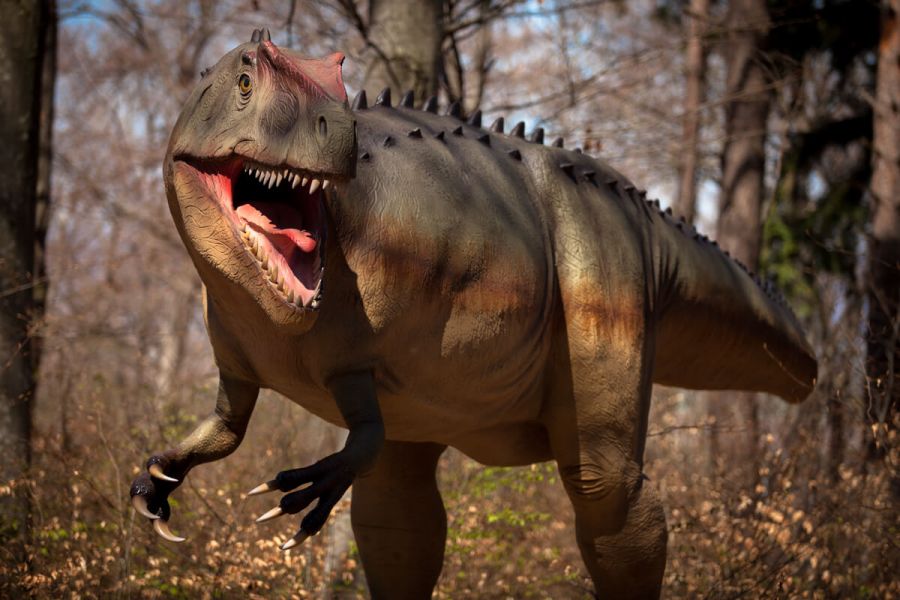
The appearance of a dinosaur is an important part of an immersive attraction. Realistic body proportions, skin textures, teeth, claws, facial features, and other details help create a convincing prehistoric appearance.
AMODINO CHINA develops dinosaur models with reference to fossil evidence, paleontological research, and scientific reconstructions, while also considering the visual requirements of modern entertainment and educational attractions.
The result is a balance between scientific inspiration and visitor appeal.
Depending on the project, animatronic dinosaurs can be customized in terms of:
· Dinosaur species
· Size and proportions
· Body shape and appearance
·Skin texture and colors
· Teeth and claws
· Facial details
· Movement effects
· Sound effects
· Display environment
How Animatronic Dinosaurs Move
Unlike traditional static dinosaur statues, animatronic dinosaurs use mechanical systems and programmed controls to create dynamic movements.
Depending on the model, a dinosaur may perform:
· Jaw opening and closing
· Head and neck movement
· Body movement
· Tail swinging
· Limb movement
· Breathing effects
· Roaring and sound effects
These movements make the dinosaur attraction more interactive and visually engaging.
For theme parks, dynamic movement can also be used as part of the storytelling. A dinosaur turning its head, moving its tail, opening its mouth, or producing a roar can attract visitors from a distance and encourage them to explore the surrounding area.
Dinosaur Science: Understanding Different Species
A well-designed dinosaur-themed exhibit can also introduce visitors to basic paleontology and prehistoric life.
Therizinosaurus — The Dinosaur with Giant Claws
Therizinosaurus lived during the Late Cretaceous period and is famous for its extremely long forelimb claws.
Although it belongs to the theropod group, which includes many well-known carnivorous dinosaurs, Therizinosaurus is generally considered to have been primarily herbivorous.
Its unusual body structure demonstrates the remarkable diversity of theropod dinosaurs.
Brachiosaurus — A Giant Herbivore
Brachiosaurus was a large herbivorous dinosaur from the Late Jurassic period.
Its long neck, high shoulders, and large body gave it a distinctive appearance. Its anatomy allowed it to reach vegetation at considerable heights.
A life-size Brachiosaurus model can also help visitors understand just how large some prehistoric animals were compared with modern humans.
Allosaurus — A Jurassic Predator
Allosaurus was a large theropod that lived during the Late Jurassic period.
It had powerful jaws, sharp teeth, strong hind limbs, and a relatively lightweight skull. Fossils of Allosaurus are particularly well known from North America.
As one of the major predators of its ecosystem, Allosaurus is an excellent example of a large Jurassic carnivorous dinosaur.
Velociraptor — A Small but Specialized Theropod
The real Velociraptor was considerably smaller than the giant dinosaurs often shown in popular movies.
It lived during the Late Cretaceous period in what is now Mongolia. Velociraptor had a relatively lightweight body and a distinctive enlarged sickle-shaped claw on the second toe of each hind foot.
Its anatomy shows that impressive adaptations did not always require enormous body size.
Carnotaurus — The Horned Dinosaur
Carnotaurus lived during the Late Cretaceous period in what is now South America.
Its most recognizable features were the pair of horn-like structures above its eyes. It also had very short forelimbs and powerful hind limbs.
These unusual features make Carnotaurus one of the most visually distinctive carnivorous dinosaurs for modern dinosaur attractions.
Herbivores and Carnivores: A Simple Way to Explore Dinosaur Diversity
One of the most engaging ways to introduce dinosaur science is by comparing herbivorous and carnivorous dinosaurs.
Herbivorous dinosaurs developed different adaptations for feeding on plants. Some had long necks for reaching vegetation, while others had specialized teeth or jaws for processing plant material.
Carnivorous dinosaurs generally had adaptations associated with hunting and feeding on other animals, such as sharp teeth, strong jaws, claws, or powerful hind limbs.
However, dinosaur evolution was highly diverse. Not every theropod was a carnivore. Therizinosaurus, for example, was a highly unusual theropod that is generally considered to have been primarily herbivorous.
These differences make dinosaur exhibits valuable tools for introducing visitors to the diversity and evolution of prehistoric animals.
Designing an Immersive Dinosaur Environment
Great dinosaur design solutions go beyond individual dinosaur models.
To create a complete prehistoric experience, dinosaur attractions can be integrated with:
· Forest landscapes
· Rocks and artificial mountains
· Caves
· Prehistoric vegetation
· Educational signage
· Themed pathways
· Lighting and sound effects
· Interactive visitor areas
Combining these elements can turn a simple dinosaur display into an immersive dinosaur theme park attraction.
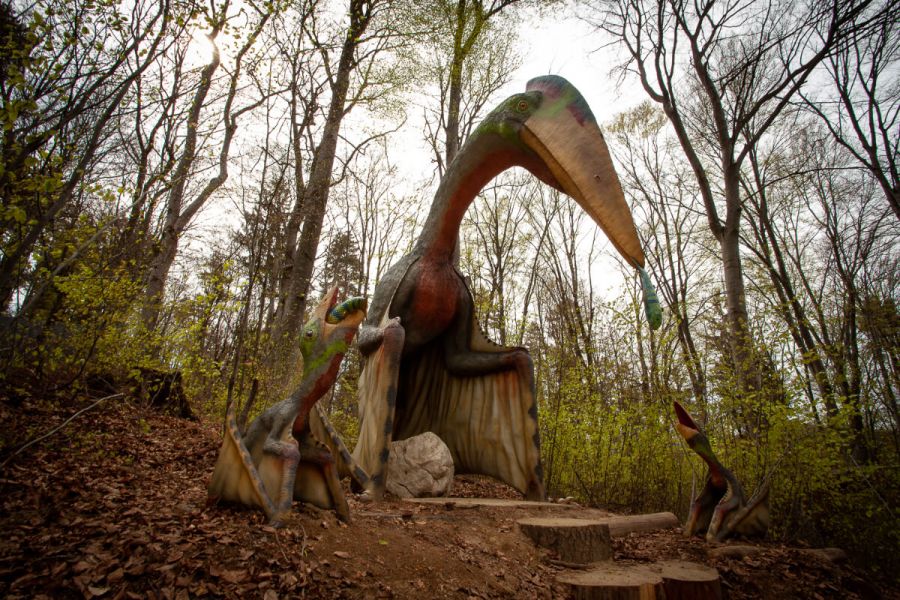
In outdoor environments, realistic animatronic dinosaurs can be positioned within natural landscapes to create the impression that prehistoric creatures are inhabiting the environment around visitors.
Dinosaur Attractions with Educational Value
Modern theme parks increasingly combine entertainment with education.
Compared with traditional pictures and text panels, life-size animatronic dinosaur models allow visitors to experience prehistoric animals on a much larger visual scale.
Children can stand next to a dinosaur and compare its size with their own height. They can observe the differences between herbivores and carnivores, examine different body structures, and learn about the geological periods in which different species lived.
This makes animatronic dinosaur exhibits suitable not only for entertainment but also for family education, natural history programs, science exhibitions, and interactive learning environments.
Custom Dinosaur Design Solutions by AMODINO CHINA
AMODINO CHINA specializes in custom dinosaur design solutions for international theme parks, dinosaur parks, museums, science centers, exhibitions, scenic attractions, and cultural tourism projects.
Our solutions can be customized according to project requirements, including dinosaur species, dimensions, appearance, movements, sounds, and themed environments.
The project development process can cover:
Dinosaur Concept & Design → Model Development → Manufacturing → Mechanical & Motion Systems → Testing → Project Installation
By combining realistic dinosaur design with reliable animatronic technology and themed environments, AMODINO CHINA helps clients create memorable dinosaur attractions tailored to their target visitors and project goals.
Create Your Own Dinosaur Attraction
Whether you are developing a dinosaur theme park, museum exhibit, science center, amusement park, or outdoor dinosaur attraction, the right dinosaur design can make a significant difference to the visitor experience.
From a single lifelike dinosaur model to a complete prehistoric-themed exhibition, AMODINO CHINA provides customized solutions designed around your project requirements.
With the combination of realistic dinosaur design, animatronic movement, immersive environments, and educational content, a dinosaur attraction can become more than a display—it can become an interactive prehistoric experience that visitors remember.